The short answer
Which method should you choose?
Start with snaking. It is the right first step for almost every household clog, it works on every pipe size, and it tells the technician a great deal about what is going on. Consider hydro jetting when the same line keeps blocking, when the cause is grease or sludge coating the pipe wall, or when roots need to be flushed out after cutting.
The two are not rivals. On a badly blocked main line the usual sequence is to snake first so the standing water can drain, then jet to clean the pipe properly. A jetter cannot work well in a pipe that is completely full.
How snaking works
What does a drain snake actually do?
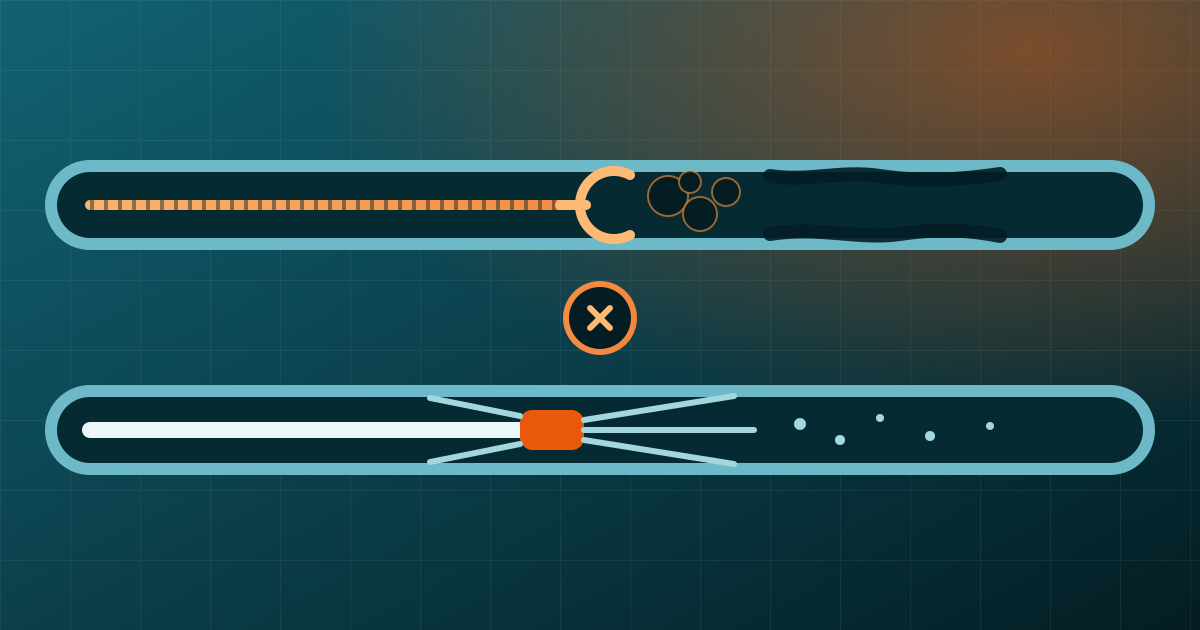
A snake is a steel cable with a head on the end, turned by hand or by a motor. The head bores into the blockage, cuts it up or hooks it so it can be pulled back. Small cables handle sinks and tubs. Thick cables with expanding blades handle 3 and 4 inch sewer lines.
Its strength is precision. The cable reaches a specific obstruction and deals with it. Its limit is that the head is narrower than the pipe in most cases, so it opens a channel through soft material and leaves a coating behind. In a greasy kitchen line, that coating is what closes up again a few months later. Our page on kitchen sink drain snaking explains why a second pass with a scraping head matters.
How jetting works
What does hydro jetting do differently?
A hydro jetter pumps water at high pressure through a hose with a nozzle on the end. Rear-facing jets pull the hose down the line and blast the pipe wall. A forward jet breaks into the blockage ahead. The water scours the full circumference of the pipe and carries the debris downstream.
Because it cleans the wall and not just the center, jetting removes grease, soap, sludge, scale and fine root hairs that a cable only disturbs. The result lasts longer. The trade-offs are cost, the size of the equipment and the need for a suitable access point, normally a cleanout.
WarningHigh-pressure water can worsen a pipe that is already cracked, separated or badly corroded. A careful provider runs a camera through an older line before jetting it. If nobody mentions an inspection first, ask why.
Side by side
How do the two compare?
| Drain snaking | Hydro jetting | |
|---|---|---|
| Best for | Single clogs, solid objects, roots that need cutting | Grease, sludge, scale and recurring blockages |
| Cleans the pipe wall | Partly, with a scraping head | Yes, the full circumference |
| Works in fragile pipe | Usually, with care | Only after a camera check |
| Access needed | Trap, overflow, toilet flange or cleanout | A cleanout in most cases |
| Typical role | First response | Deep clean or maintenance |
Neither method repairs a pipe. A collapsed section, a sag that holds water or a joint that has shifted will block again whatever is used to clear it.
In older homes
What does this mean for homes around Huntington Park?
Much of the housing here has original cast iron and clay drains. That argues for caution. Snaking is gentle enough to use as a routine first step, and what comes back on the cutter, whether roots, mud or rust flakes, shows whether the pipe can take more aggressive cleaning.
If your sewer has backed up more than once in a year, ask the provider about a camera inspection after the next clearing. The recording will show whether jetting would help or whether the money is better spent on a repair. The main sewer line snaking guide covers what to expect, and our main page explains how drain snaking works from start to finish.
Pro tipAsk any provider who recommends jetting to explain what they expect it to remove that the cable did not. A clear answer, such as "the line is coated in grease for thirty feet", is a good sign. A vague one is a reason to get a second opinion.
Questions
Quick answers
Is hydro jetting always better than snaking?
No. It cleans more thoroughly, but it costs more, needs proper access and is not suitable for every pipe. For a one-off clog in a sound line, snaking is all that is needed.
Can hydro jetting remove tree roots?
It can flush out fine roots and the debris left after cutting. Thick roots are usually cut with a cable machine first. Neither method stops roots from growing back through the same opening.
How do I know if my pipe is safe to jet?
A camera inspection is the reliable way. It shows cracks, offsets and corrosion that would make high-pressure cleaning risky.
Keep reading
More from the blog
Why Drains Clog More in Older Homes
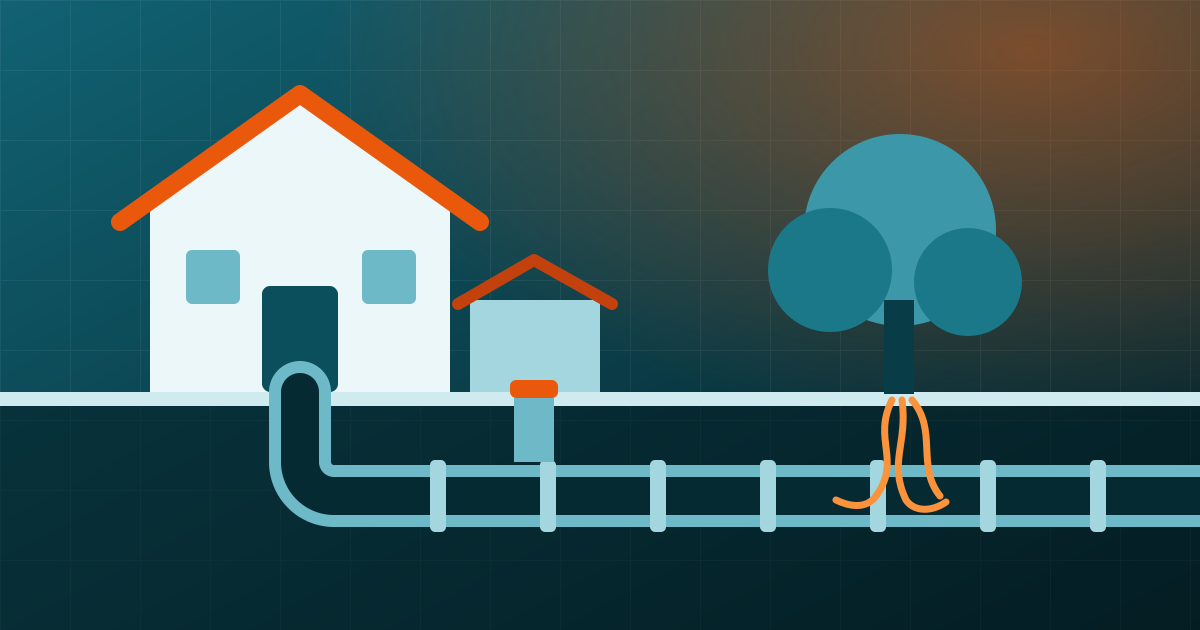
Cast iron that has rusted from the inside, clay pipe with a joint every few feet, and a back house tied into the same line. Older homes clog for specific, predictable reasons.
Read the post
How to Find Your Sewer Cleanout
The cleanout is the access point every main line job starts from. Ten minutes spent finding yours now can save a lot of time during a backup.
Read the post