Pipe materials
What are old drain pipes made of?
Three materials account for most of the drain piping in older Southern California houses, and each ages in its own way.
- Cast iron was used for stacks and for the drains under the house. It is strong and quiet, but it rusts from the inside. The rust forms rough scale that narrows the pipe and snags paper and grease.
- Vitrified clay was the standard for the sewer from the house to the street. The pipe itself resists corrosion well. Its weakness is the joints, which occur every few feet and can shift or lose their seal.
- Galvanized steel was common for smaller branch drains from kitchens and bathrooms. It corrodes until the opening is a fraction of its original size.
A pipe with a rough or narrowed interior needs far less debris to block it. That is why an older kitchen can clog with a level of grease that a new one would shrug off.
Tree roots
Why are roots such a problem?
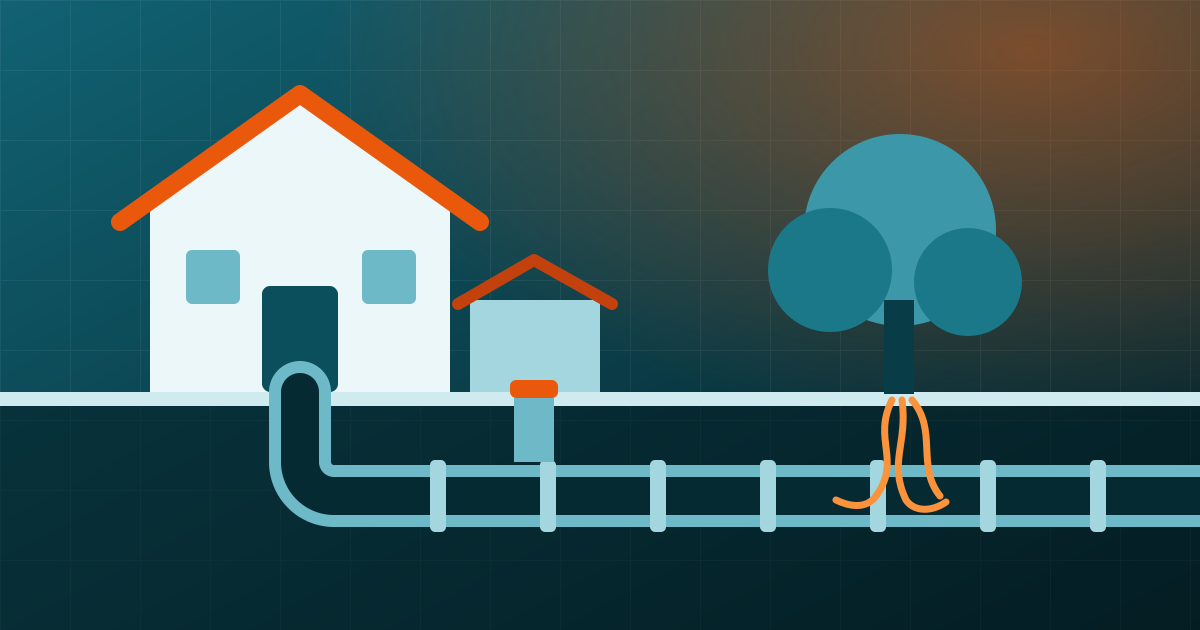
Trees planted when a neighborhood was new are now fully grown, and their roots spread a long way. In a dry climate, roots follow any reliable moisture. A sewer joint that weeps a little is exactly that.
A root enters as a thread, then thickens and branches inside the pipe. It acts like a net, catching paper and wipes until the line stops. Cutting the roots restores flow, and they return through the same gap. A pattern of backups every year or so is the classic sign. See our main sewer line snaking page for how root cutting is done.
Layout and additions
How do additions and rear units affect the drains?
Many lots in and around Huntington Park have gained a rear house, a converted garage or an enclosed porch with a laundry. These were usually connected to the existing sewer. The original pipe now carries two or three households.
Additions also create long branch lines with little slope. Water slows down in them and solids settle. The combination of extra load and flat runs is behind many of the calls from Florence-Firestone and Walnut Park, where multi-dwelling lots and deep lots are common.
Pro tipIf you share a sewer line with another unit, agree a few simple rules with the other household: no wipes, no grease, strainers in every tub and sink. A shared pipe is only as clear as its heaviest user allows.
Old fittings
Which old fittings cause trouble?
Some parts found in older bathrooms are clog-prone by design. The drum trap, a canister-shaped trap fitted under many older bathtubs, holds a pool where hair and sludge collect and is hard to pass a cable through. Our bathroom drain snaking guide explains how it is dealt with.
Missing cleanouts are another issue. Many older homes were built with few access points, or the cleanout has since been buried under paving or planting. Without one, a technician has to remove a toilet or work from the roof, which takes longer.
What to do
How can you keep older drains working?
- Fit strainers in the kitchen sink, tub and shower, and empty them into the trash.
- Wipe greasy pans with paper before washing and never pour oil down the sink.
- Flush only toilet paper. Wipes of every kind go in the trash.
- Run water for a few seconds after using the garbage disposal so solids travel the full length of the line.
- Find your cleanout before you need it, and keep it uncovered.
- After a second backup in the same line, ask for a camera inspection.
An old drain system that is treated carefully can go on working for many years. When something does block, a cable is the right first response, and our overview of drain snaking for Huntington Park homes explains each step.
Questions
Quick answers
Do old pipes always need replacing?
No. Many older drains work well for decades. Replacement becomes worth pricing when a line blocks repeatedly, leaks, or a camera shows cracks, offsets or heavy corrosion.
Is it safe to snake old cast iron?
Yes, with a cable sized for the pipe and a technician who works by feel. Badly corroded pipe needs extra care, and the technician should stop if the pipe feels fragile.
How do I know what my pipes are made of?
Look at exposed pipe in a crawl space, garage or under a sink. Cast iron is thick, black and rough. Galvanized steel is gray with threaded joints. Plastic is black (ABS) or white (PVC).
Keep reading
More from the blog
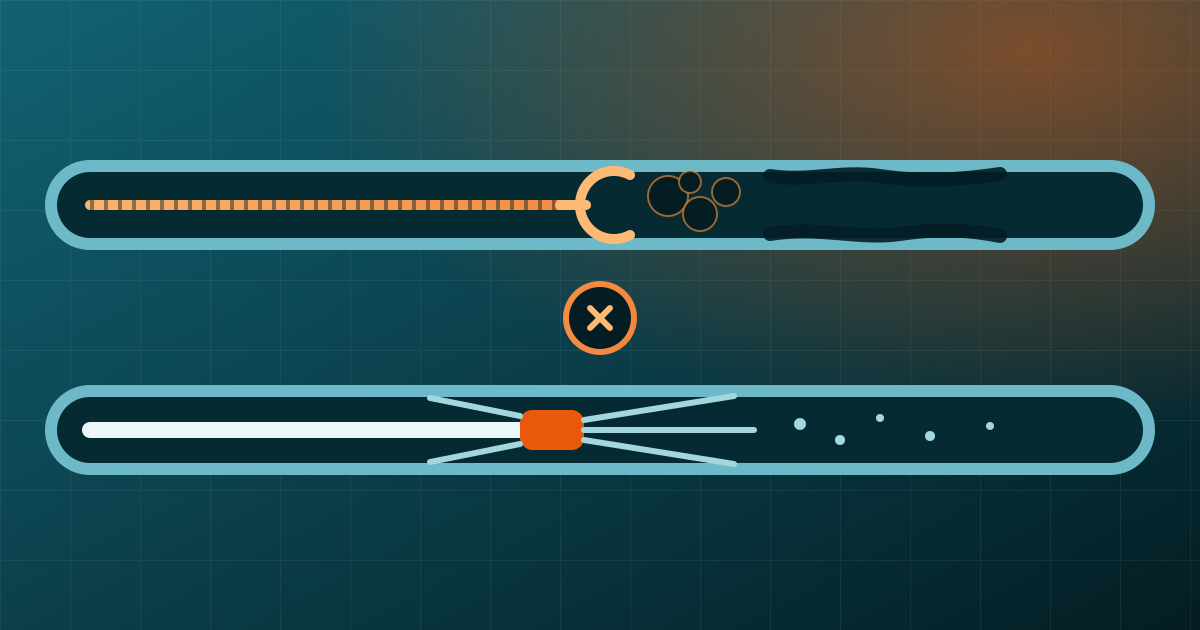
Drain Snaking vs Hydro Jetting
A cable bores through a blockage. A water jet scours the whole pipe. Here is how to tell which one your line needs, and when using both makes sense.
Read the post
How to Find Your Sewer Cleanout
The cleanout is the access point every main line job starts from. Ten minutes spent finding yours now can save a lot of time during a backup.
Read the post