Huntington Park, California
Drain Snaking in Huntington Park, CA
Sink full of gray water, toilet at the rim, or every drain in the house running slow? One call connects you with a local drain technician who can cable the line, clear the blockage and test it with you before leaving.
- Sinks, tubs and toilets
- Main sewer lines
- Houses, duplexes and rentals
- Southeast LA County
Huntington Park Drain Pros is a referral service. Your call is connected to an independent local drain provider, who quotes and performs the work.
The direct answer
What does drain snaking actually fix?
Drain snaking clears a blocked pipe by feeding a flexible steel cable into the line and spinning it, so the head at the tip bores through, breaks up or hooks whatever is stopping the water. It is the standard first response to a clogged drain because it works on nearly every kind of household blockage and does not put chemicals into your plumbing.
In Huntington Park that matters more than in newer suburbs. A large share of the housing here went up in the first half of the last century, and many lots now carry a rear unit or a converted garage tied into the same drain. Old pipe, long runs and more people per line add up to drains that clog sooner and clog deeper than a plunger can reach.
This page explains how snaking works, which symptoms point to which line, what a visit involves and what changes the price. If you already know what is wrong, go straight to kitchen sink drain snaking, toilet snaking or main sewer line snaking.
Snaking in one paragraph
A cable goes in through a trap, an overflow or a cleanout. The technician rotates it by hand or motor, feels the blockage through the cable, works a head through it, then runs water to prove the line is open. The size of the cable and the shape of the head are matched to the pipe.
- Finds the real locationCable footage tells the technician how far in the clog sits.
- No caustic chemicalsNothing is left sitting in the trap or on the pipe walls.
- Works on every line sizeFrom a 1.25 inch lavatory drain to a 4 inch sewer.
Services
Which drain needs snaking?
Each line in a house clogs for different reasons and needs a different cable. Pick the one that matches your problem.
Main Sewer Line Snaking
When every drain is slow or the lowest tub fills as the washer empties, the stoppage is in the building sewer. A heavy cable machine works from the cleanout with cutting heads sized for 3 and 4 inch pipe, chewing through roots, wipes and settled sludge until the whole house drains again.
Read the guideKitchen Sink Drain Snaking
Cooking grease cools and hardens inside the wall, then catches rice, coffee grounds and peelings until the sink will not empty. A small drum machine fed through the trap arm scrapes that plug out of the branch line, well past where a plunger or disposal can reach.
Read the guideBathroom Drain Snaking
Hair knits together with soap scum and toothpaste to form a rope in the trap of a sink, tub or shower. A slim hand-fed cable, usually sent through the tub overflow or the sink trap arm, hooks that mat and pulls it back out in one piece.
Read the guideToilet Snaking
A toilet that rises to the rim, drains slowly or needs two flushes has something lodged in its built-in trapway. A closet auger with a protective sleeve reaches through the porcelain bend to push through or retrieve wipes, paper wads and dropped objects.
Read the guideFloor and Laundry Drain Snaking
Lint from the washing machine, garage grit and dried-out traps make floor drains and laundry standpipes overflow or smell. A mid-size cable clears the long, flat run these drains sit on, and the trap is refilled so sewer gas stays out of the room.
Read the guideUrgentEmergency Drain Snaking
Sewage coming up in a shower, a toilet that will not stop rising or water spreading across the floor cannot wait for a convenient day. Call, describe what you see, and ask the provider how soon someone can reach you and what the visit will involve.
Read the guideSymptom checker
What is your drain telling you?
Drains give clear signals before they stop completely. Match what you see, hear or smell to the line that is most likely blocked.
WarningIf waste water is coming up through a tub, shower or floor drain, treat it as a main line stoppage. Stop all water use in the building, keep children and pets away from the area, and call for emergency drain snaking.
In-depth guide
Why do Huntington Park drains clog, and how are clogs found?
Knowing what is in the pipe and where it sits is most of the job. Here is what causes blockages in local homes, how a technician pins them down, and what happens once the line is open.
What causes most household clogs?
Nearly every blockage is built from ordinary things that go down a drain every day. They do not stop the pipe at once. They coat the wall, narrow the opening and then catch the next thing that passes.
- Grease and cooking oil. Liquid when hot, solid a few feet into the wall. It lines kitchen branch lines and traps food solids until the pipe closes.
- Hair and soap scum. Hair tangles on the stopper linkage and trap, and soap binds it into a dense, slippery rope in bathroom drains.
- Wipes, paper towels and hygiene products. They do not break apart like toilet paper. They snag on rough pipe and build a dam.
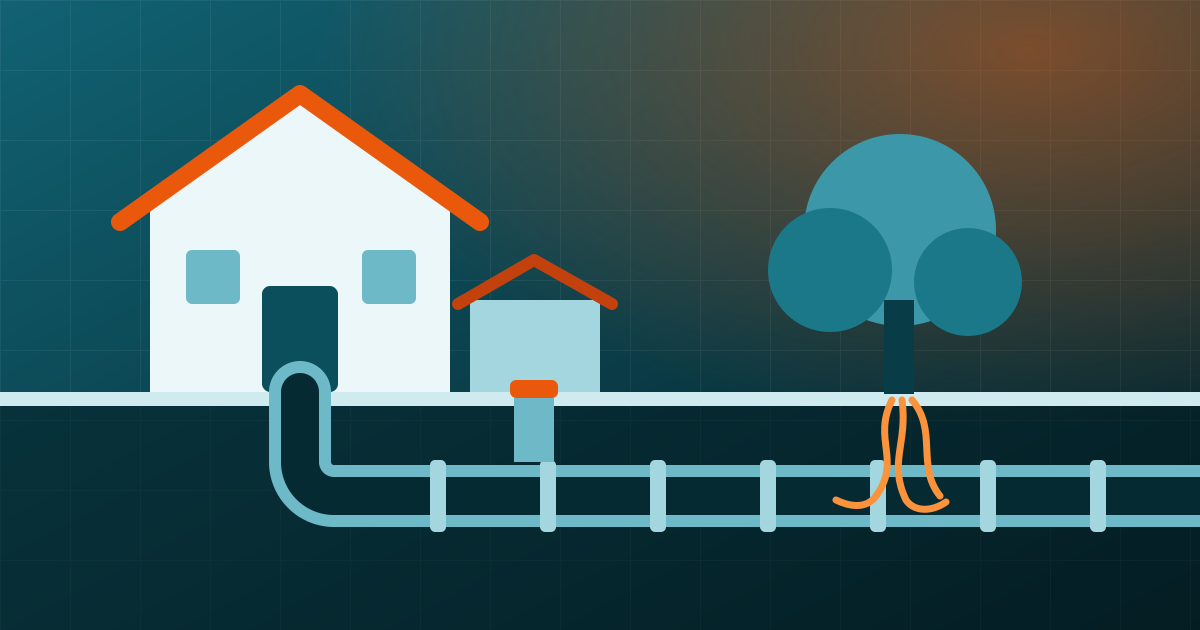
- Tree roots. Roots follow moisture into joints and cracks in buried clay and cast iron, then spread inside the pipe like a net.
- Scale and rust. Old cast iron flakes inward, and hard Southern California water leaves mineral crust that roughens the pipe wall.
- Lint and sediment. Washing machines discharge lint and grit that settles in flat laundry and floor drain runs.
Local housing adds its own pressure. When a rear house or a converted garage is tied into an older lateral, a pipe sized for one household carries the waste of two or three.
How does a technician locate the blockage?
Before any cable goes in, a good technician asks questions and runs water. Which fixtures are slow? Did it happen suddenly or over weeks? Does one fixture react when another is used? The answers separate a local clog from a main line problem within minutes.
Next comes access. Every drain system has entry points: the trap under a sink, the overflow plate on a tub, and capped cleanouts on the larger lines. The cleanout for the main line is usually outside near the foundation or in a side yard. Feeding the cable from the right opening avoids forcing it around tight bends it was not made for.
The cable itself is the measuring tool. The technician counts how many feet have gone in when the cable meets resistance, and feels whether it is soft like grease, springy like roots or hard like a broken pipe. What comes back on the head, whether hair, rags or fine root strands, confirms the cause. If the cable keeps hitting something solid, a camera inspection is the next step, because no amount of snaking fixes a collapsed or offset pipe.
Pro tipTell the technician about any earlier clogs in the same line and roughly when they happened. A drain that blocks every few months has a cause that snaking alone will not remove, and that history changes the plan.
What happens after the line is cleared?
Opening the pipe is half the visit. The technician should run a strong flow of water for several minutes, often with more than one fixture going, and watch that it drains without rising or gurgling. On a main line, that means flushing toilets and running a tub while someone watches the cleanout.
Then you should hear what was found: where the clog was, what it was made of and whether it is likely to come back. Grease and hair clogs are usually a one-time fix if habits change. Roots, bellies in the pipe and heavy scale return on a schedule, and the provider may suggest a camera inspection, hydro jetting or a repair. You decide whether to act on that advice, and you are free to get a second opinion.
Afterwards, simple habits keep the line open: strainers in the tub and kitchen sink, grease wiped into the trash instead of rinsed away, and nothing but toilet paper in the toilet. For a shared lateral, agree those rules with everyone on the property. Problems in bathroom drains and in floor and laundry drains respond especially well to prevention.
Process
How does a drain snaking visit work?
Four stages, start to finish. A simple fixture clog moves through them quickly. A main line takes longer at stage three.
Call and describe it
Tell the provider which fixtures are affected, how long it has been going on and whether water is backing up anywhere. That decides which machine is brought.
Diagnosis on site
The technician tests fixtures, finds the right access point and explains what they expect to find. Ask for the price and what it covers before work begins.
Cable the line
The cable is fed in and rotated until it reaches the blockage. Heads are swapped as needed to bore through, cut up or pull back the material.
Flow test and advice
Water is run to prove the drain is open. You are told what caused the clog and whether anything further, such as a camera inspection, is worth considering.
Costs of waiting
What happens if you leave a slow drain alone?
A slow drain is a partly blocked drain. It does not clear itself, and each week of use adds to it. These are the usual consequences.
Water damage spreads
An overflow soaks into cabinet bases, subfloor and drywall within hours. Drying or replacing those materials costs far more than clearing the pipe would have.
Sewage is a health hazard
Backed-up waste water carries bacteria. Once it touches flooring, rugs or stored belongings, proper cleanup means disinfection or disposal, not a mop.
The clog gets denser
A partial blockage keeps collecting debris. Soft grease that a small cable would have cleared hardens into a long plug that needs a bigger machine and more time.
Old pipe is stressed
Standing water sits against joints that were never meant to hold it. In aging cast iron and clay it finds weak spots, and leaks begin under floors and in walls.
Everyone on the line is affected
On a lot with a rear unit or in a multi-unit building, one blocked lateral takes out the plumbing for every household that shares it.
Timing stops being yours
A slow drain can be booked for a convenient time. A full backup forces an urgent visit at whatever hour it happens to fail.
Cost factors
What affects the cost of drain snaking?
We do not publish prices, because each independent provider sets its own. These seven factors are what move a quote up or down, so you know what to ask about.
| Factor | How it changes the job |
|---|---|
| Which line is blocked | A sink or tub branch needs a small cable and little setup. A main sewer line needs a heavy machine, more cable and more time. |
| Access to the pipe | A ground-level cleanout is fastest. No cleanout can mean pulling a toilet or working from a roof vent, which adds labor. |
| Distance to the clog | A blockage at the trap is quick. One sitting far down the lateral near the street takes longer to reach and retrieve. |
| What the clog is made of | Hair and soft grease clear in one pass. Roots, hardened grease and scale need cutting heads and repeated passes. |
| Condition of the pipe | Sound pipe lets the cable work freely. Corroded, offset or sagging pipe slows the job and may call for a camera inspection. |
| Time of the visit | Evening, weekend and holiday calls are often priced differently from weekday appointments. Ask before you book. |
| Extra services | Camera inspection, hydro jetting and repairs are separate items. Each should be explained and agreed before it is done. |
Pro tipAsk three things on the phone: is the price flat or by the hour, what happens if the first attempt does not clear the line, and is there a separate charge for coming out. Clear answers make quotes easy to compare.
Service areas
Where is drain snaking available?
Huntington Park and the communities that border it in Southeast Los Angeles County. Each has its own housing mix, and that shapes how drains fail.
Huntington Park
The core of our coverage. Compact lots, older houses and many properties with a second dwelling in the back mean long drain runs and heavily used laterals. Kitchen lines and main sewer stoppages are the typical problems on properties like these.
Walnut Park
Directly south and sharing the 90255 ZIP code, Walnut Park is mostly single-family homes on deep lots. Laundry rooms and kitchens often sit far from the main stack, so branch lines are long and flat and collect grease and lint along the way.
Florence-Firestone
To the west, Florence-Firestone mixes early bungalows with added rear units. When two or three households drain into one lateral, a single root intrusion or wad of wipes backs up every bathroom on the property at once.
Maywood
East of Huntington Park, Maywood is one of the most densely settled small cities in the region. Apartments and multi-unit buildings share drain stacks, so a blockage on the ground floor is felt by neighbors above it.
Bell
Bordering to the east and southeast, Bell has houses, apartment courts and mobile home communities side by side. Each type has its own drain layout, from crawl-space piping to shallow lines under a home pad.
South Gate
The larger city to the south, South Gate is full of mid-century homes with mature street trees. Original cast iron and clay sewer laterals of that age are prime targets for root intrusion and scale.
How it works
How does the referral work, and who does the job?
Plain facts about what this site is, so you know exactly who you are dealing with when you call.
You call the number
The phone number on this site is a tracking line. It routes your call to a drain service provider that covers the Huntington Park area.
You speak to the provider
You describe the problem directly to the company that would do the work. They tell you their availability and how they charge.
You decide
There is no obligation. If the timing or the price does not suit you, you can decline and you owe nothing for the call.
They do the job
If you go ahead, the provider sends a technician. The agreement, the payment and any guarantee are between you and that provider.
Huntington Park Drain Pros does not employ plumbers, own drain machines or perform any work. We run this website as a guide to drain snaking and connect callers with an independent local provider. We may be paid by the provider or a call network when a call is connected, which is how the site stays free to use. It costs you nothing extra.
Because the provider is a separate business, we cannot promise a price, an arrival time or an outcome on its behalf. What we can do is tell you what to check.
Questions to ask before work starts
- Does the company hold a current California contractor license for this kind of work, and what is the number?
- Is the business insured for work at your property?
- What is the total price, and what would make it change?
- Is there any warranty on the clearing, and for how long?
A reputable provider answers all four without hesitation. You can verify a contractor license yourself with the California Contractors State License Board.
Before you call
What should you have ready?
Six details that take a minute to gather and help the provider send the right technician with the right machine the first time.
- Your address and the nearest cross street
- Which fixtures are slow or backed up
- When it started and whether it is getting worse
- Where the cleanout is, if you know
- Type of property and how many units share the drain
- Any chemical cleaner already poured in
Mentioning drain cleaner matters for safety: the technician needs to know before opening a trap full of caustic water.
From the blog
Want to understand your drains better?
Short guides on methods, prevention and older homes. See every post on the blog.
FAQ
Drain snaking questions, answered
Short, direct answers to what Huntington Park residents ask most before booking.
What is drain snaking?
Drain snaking is the mechanical clearing of a blocked pipe with a flexible steel cable, also called a drain auger or plumber's snake. The cable is fed into the line and rotated so the head at its tip bores through, cuts up or hooks the blockage, which lets water flow again.
How long does it take to snake a drain?
A single sink, tub or toilet with a clog close to the fixture is often cleared in well under an hour once the technician is set up. Main sewer lines take longer because the machine is heavier, the cable run is longer, and roots or heavy buildup may need several passes with different heads.
Will snaking damage my pipes?
Used correctly, a cable sized for the pipe does not harm sound plumbing. The risk is highest in badly corroded cast iron, thin old galvanized steel and cracked clay, where the pipe was already failing. A careful technician feels that resistance through the cable and will stop and recommend a camera inspection.
Is snaking better than chemical drain cleaner?
For anything more than a light film of soap, yes. Liquid cleaners rarely reach a clog that sits several feet down the line, they can sit in the trap and attack metal and rubber parts, and they make the standing water hazardous for whoever opens the pipe next. A cable physically removes the obstruction.
What is the difference between snaking and hydro jetting?
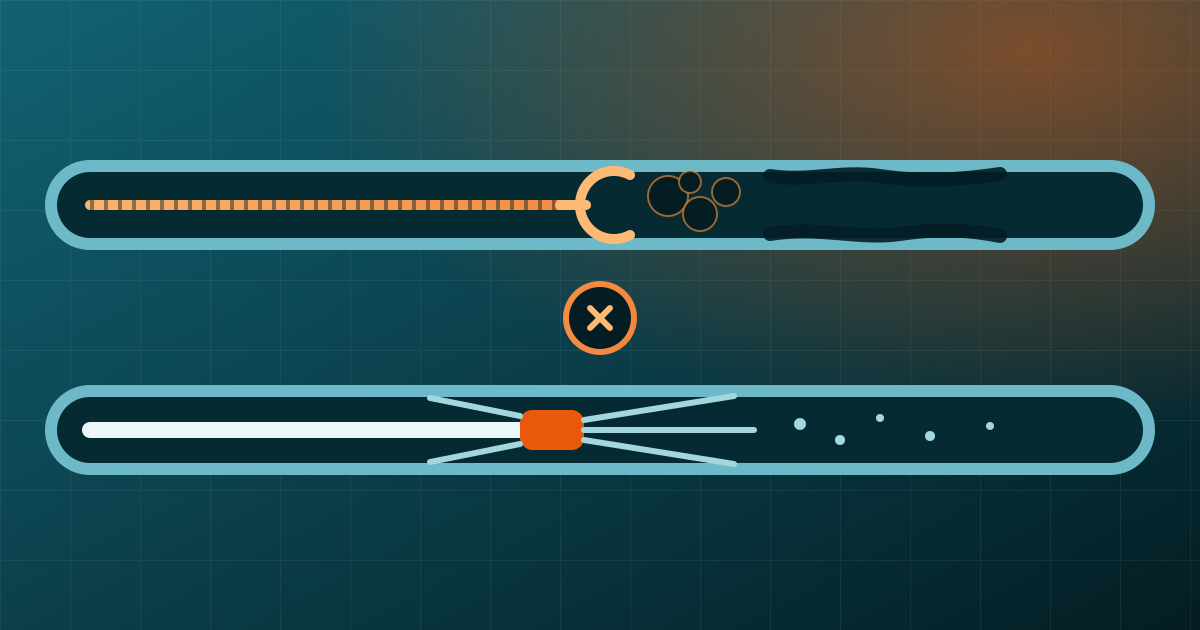
Snaking uses a rotating cable to open a path through the blockage. Hydro jetting uses high-pressure water to scour the full inside wall of the pipe. Snaking is the usual first step and is enough for most household clogs. Jetting is considered when grease or sludge keeps returning.
Why do several drains back up at the same time?
When more than one fixture is slow, or flushing a toilet makes a tub or shower gurgle, the blockage is almost always in the main sewer line that every branch drains into. That is a job for a larger machine working from a cleanout, not a hand snake at one sink.
Can a snake remove tree roots?
A main line machine fitted with a root-cutting blade can cut through root masses and restore flow. It does not seal the crack or joint the roots came in through, so they grow back. Many providers suggest a camera inspection after the line is open to see the pipe condition.
How much does drain snaking cost in Huntington Park?
It depends on which line is blocked, how the line can be reached, how far in the clog sits and what it is made of. We do not publish prices because each independent provider sets its own. Ask for the price and what it includes before any work starts.
Do I need to be home for the visit?
Yes, plan for an adult to be there. The technician needs access to the fixtures, the cleanout and sometimes the roof vent, and you will want to see the drain tested with running water before the job is closed out. Renters should also tell the landlord or property manager.
What should I do while I wait for the technician?
Stop running water into the blocked fixture, and if more than one drain is affected, stop using water throughout the home, including the dishwasher and washing machine. Do not pour chemical cleaner in. Clear the space around the fixture and locate the cleanout if you know where it is.
Clogged right now?
Get your drain flowing again today
Speak with a local drain provider about your clog, get a price and choose a time that works.
(213) 874-1096