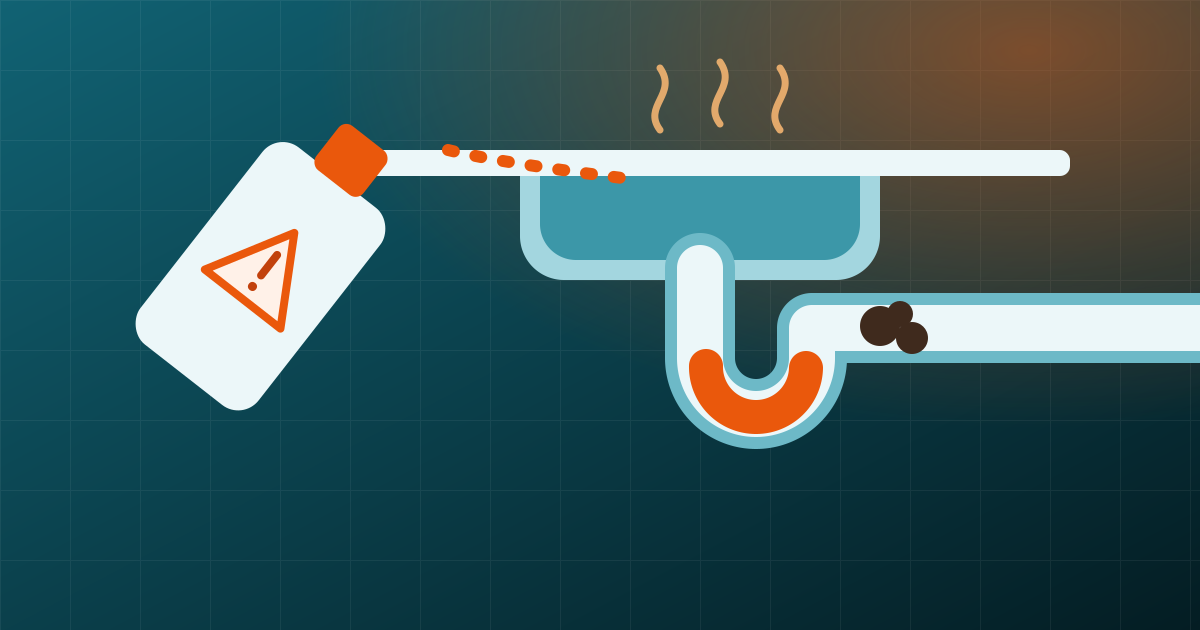
The three types
What kinds of drain cleaner are there?
- Caustic cleaners contain lye (sodium hydroxide) or a similar alkali. They turn grease into a soapy substance and give off heat as they react.
- Oxidizing cleaners use bleach-type ingredients to break down organic material such as hair and food.
- Acid cleaners are the strongest and are generally sold for trade use. They are highly dangerous on handle.
There are also enzyme and bacterial products. These are not really cleaners in the same sense. They digest organic residue slowly over days and are meant for maintenance, not for opening a blocked drain.
Why they fail
Why do they often not work?
The chemical has to reach the clog at full strength and stay in contact with it. In practice three things get in the way.
- Distance. Many clogs sit several feet along the pipe. The cleaner is diluted by standing water long before it gets there.
- Density. A thick plug of grease or a mat of hair coated in soap scum is only attacked at its surface.
- The wrong target. Nothing in a bottle dissolves wipes, a toy, tree roots or a collapsed pipe.
When the product fails, the drain is still blocked and the fixture is now full of chemical. That is the situation technicians dislike most.
The risks
What are the risks to pipes and people?
The heat from a caustic reaction can soften plastic traps and loosen their joints. Repeated use is hard on old metal pipe, rubber seals and the finish on some fixtures. In a toilet, the heat can crack the porcelain, which is why these products should never be used there.
The risk to people is greater. Splashes burn skin and eyes. Plunging after pouring cleaner throws the liquid upward. Mixing two different products, or adding cleaner to a drain that already holds another chemical such as bleach, can release toxic gas.
WarningIf you have used a chemical cleaner and the drain is still blocked, do not plunge it and do not add anything else. Ventilate the room, keep children and pets away, and tell the technician exactly what you poured in before they open the pipe.
What to do instead
What should you try first?
Mechanical methods are safer and usually more effective.
- Remove and clean the stopper or strainer, where hair collects first.
- Use a plastic barbed drain strip to pull hair from a basin, tub or shower.
- Take off the P-trap under a sink over a bucket and clear it by hand.
- Use the correct plunger: a cup plunger for sinks and tubs, a flange plunger for toilets.
- If those fail, the clog is beyond easy reach and needs a cable.
A cable physically removes the blockage and leaves nothing behind in the pipe. The guides to kitchen sink drain snaking and bathroom drain snaking describe how it is done for each fixture.
Pro tipFor prevention, an enzyme product used monthly according to the label can help keep a kitchen line from building up grease. Treat it as upkeep for a drain that is flowing, never as a cure for one that is blocked.
When to call
When is it time to stop and call?
Stop if water is standing in the fixture and not moving, if more than one drain is affected, or if you have already tried a chemical once. A second dose rarely succeeds where the first failed, and it raises the hazard.
When you call, say which product you used, roughly how much and how long ago. Keep the bottle so the label can be read. With that information the technician can bring the right protective gear and may flush the fixture with plenty of water before starting work.
One call puts you in touch with a local drain snaking provider who can tell you what the visit involves. If waste is coming up through a tub or floor drain, go straight to emergency drain snaking.
Questions
Quick answers
Can drain cleaner damage PVC pipes?
The heat from caustic cleaners can soften plastic traps and stress their joints, particularly if the product sits in a blocked pipe for a long time.
Is it safe to snake a drain after using chemicals?
It can be done, but the technician must be told first so they can protect their skin and eyes and handle the standing water safely.
Do enzyme drain cleaners work?
They work slowly on organic buildup and are useful for maintenance. They will not open a drain that is already fully blocked.
Keep reading
More from the blog
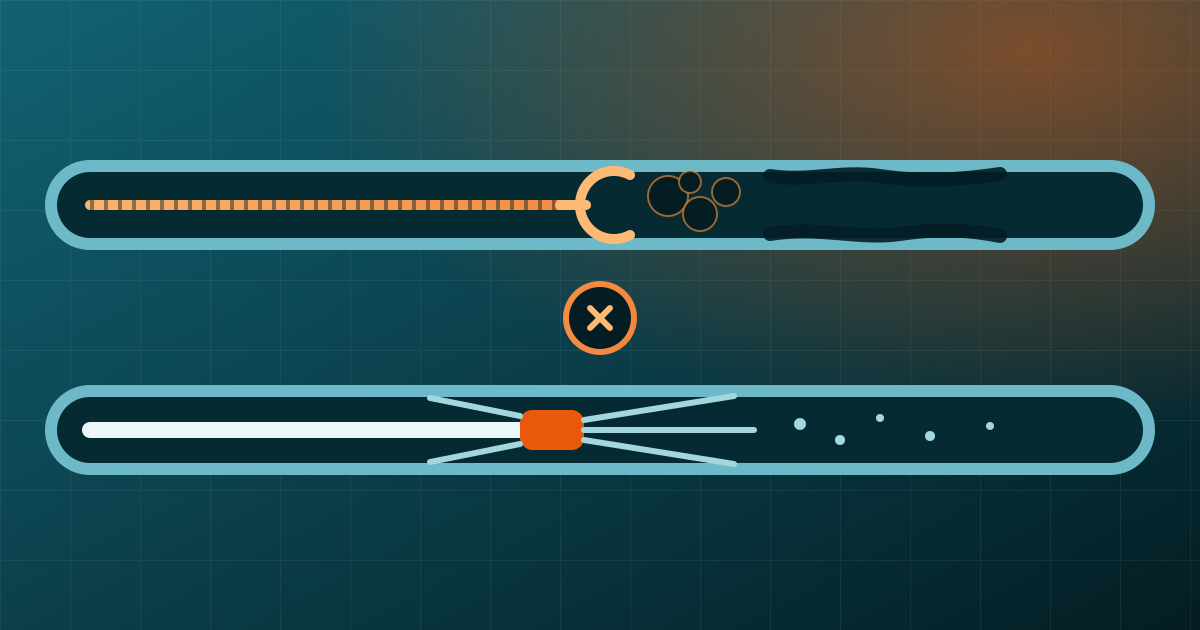
Drain Snaking vs Hydro Jetting
A cable bores through a blockage. A water jet scours the whole pipe. Here is how to tell which one your line needs, and when using both makes sense.
Read the post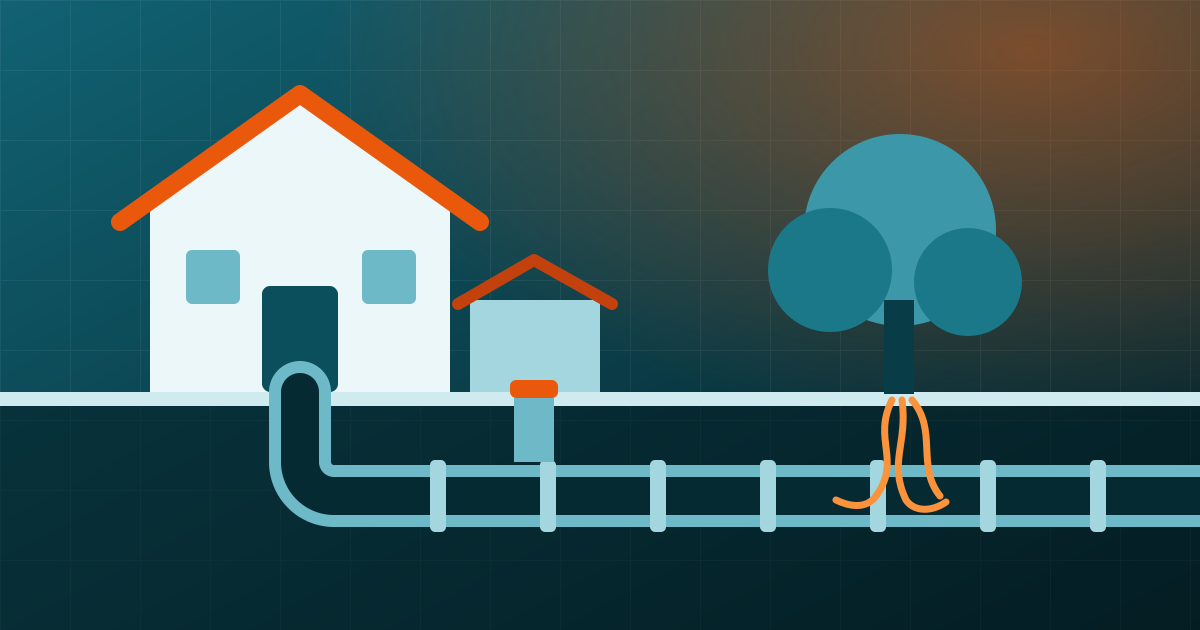
Why Drains Clog More in Older Homes
Cast iron that has rusted from the inside, clay pipe with a joint every few feet, and a back house tied into the same line. Older homes clog for specific, predictable reasons.
Read the post